Pool heater types
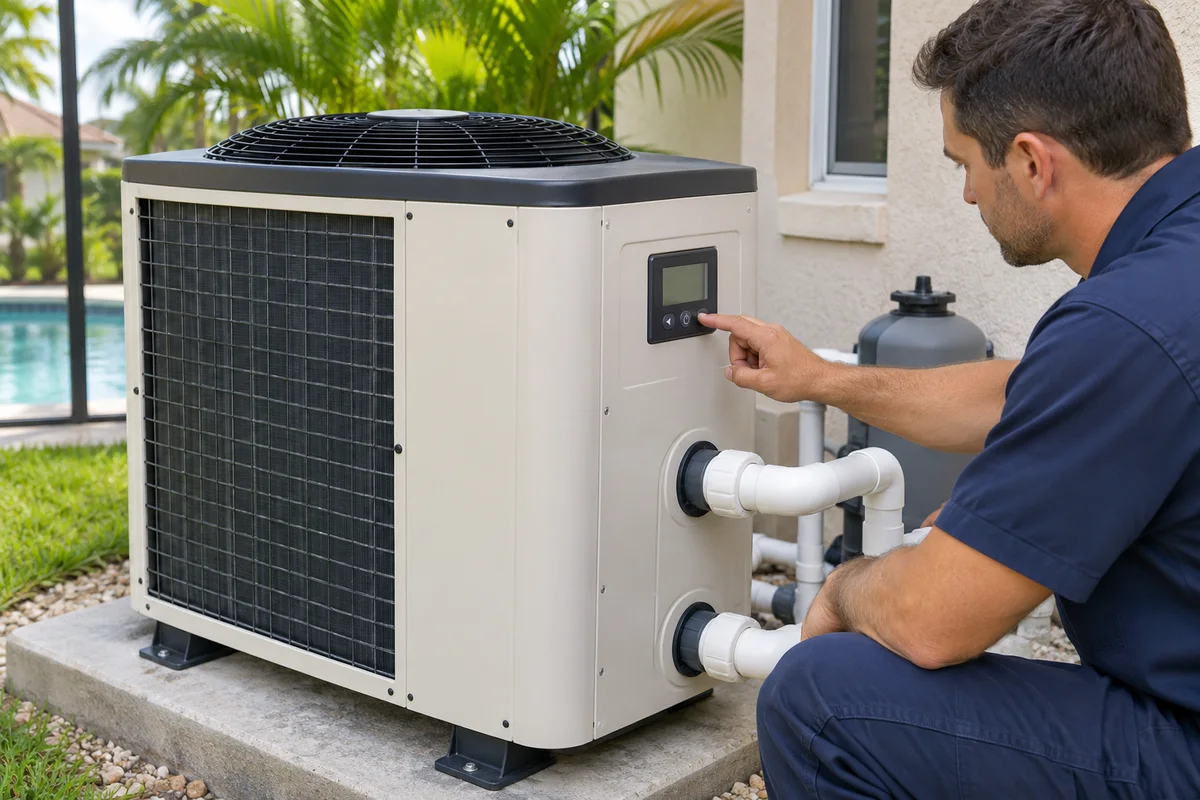
Electric heat pumps move heat from the surrounding air; gas or propane equipment heats water through a burner system. Solar systems use a different collection and control setup. We identify the actual system before discussing temperature performance, repair options or a replacement.
Heater repair scope
A fault can involve controls, sensors, circulation or an internal component. We review the displayed code and connected equipment before selecting parts. Gas, electrical and refrigerant work requires the appropriate qualified trade; homeowners should not bypass safety controls to keep a heater running.
Brands, parts and compatibility
Use the full model and serial information to identify compatible parts. Controllers and replacement boards can differ within the same brand. References to Pentair, Hayward, Raypak or AquaCal describe equipment types, rather than an authorized-dealer relationship.
Repair or replace the heater
Compare the failed component, overall condition and parts availability with the cost of a suitable replacement. The plan also considers access, connections and the way the pool is used. Equipment relocation or a new installation may need a different permit scope from a repair.
Installed parts and manufacturer warranties
Review the current warranty for the exact part or heater before work is approved. Installation records and registration can matter. Do not assume a replacement part restarts the original equipment warranty or includes every labor charge.
Commercial heater repair
Operators need a clear plan for service access and the pool closure, if required. We assess connected controls, circulation and heating demand together. Equipment changes at public pools should be coordinated with the relevant local review process before installation.
Heater repair cost factors
The diagnosis, failed part, system type and service access determine the quote. A sensor repair and a complete heat-pump replacement are different scopes. Manufacturer clearance requirements also matter: a screened or crowded equipment area must still allow the airflow and service space required by that model.