Evaporation and unexplained water loss
Sun, wind, splash-out, rainfall and automatic top-up can disguise how much water is being lost. Record the water level and recent use before assuming there is a leak. A falling level by itself does not identify the damaged component or justify draining the pool.
A simple screening check before the visit
If it can be done safely from the deck, place a stable bucket on a pool step with water inside close to the pool level. Mark both levels separately. With automatic top-up off and no swimming or rain, compare the changes after about 24 hours. Stop if conditions are unsuitable; the comparison is only a screening check.
When to arrange professional leak detection
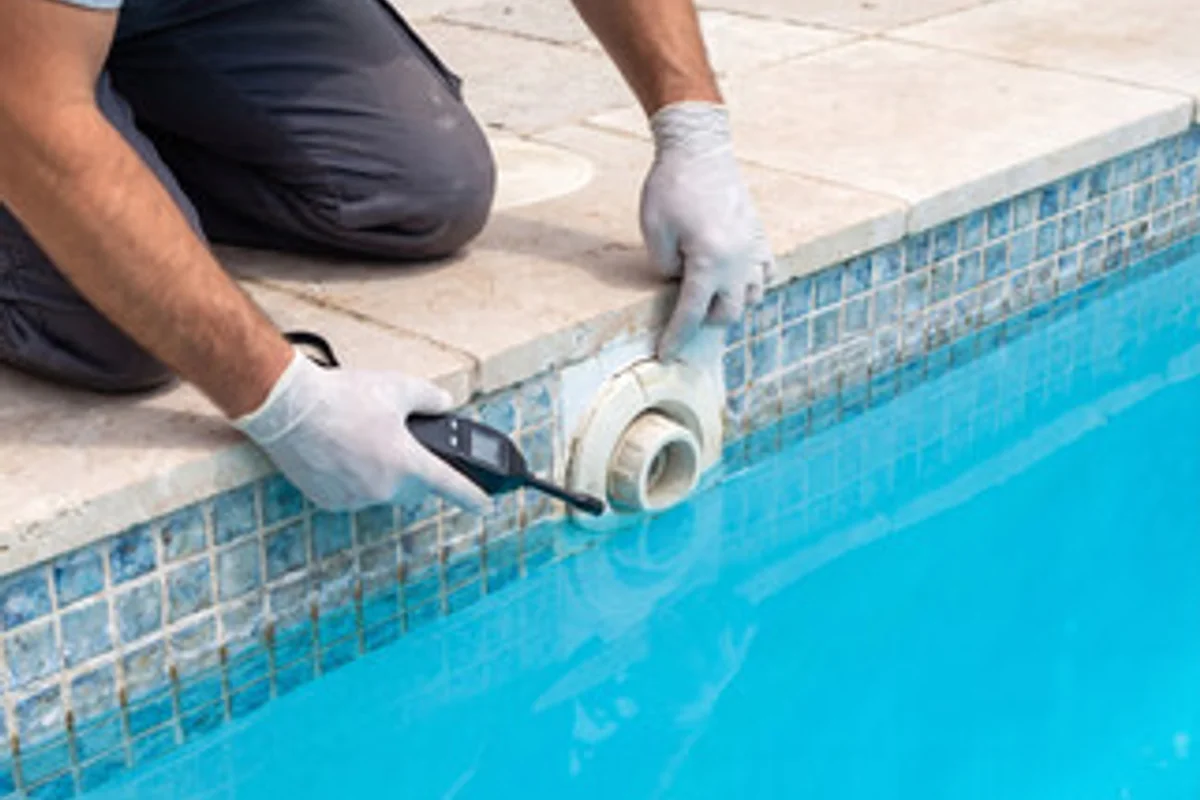
Arrange an inspection for repeated unexplained loss, persistent wet ground or air entering the circulation system. Note whether the loss changes when equipment is running. Avoid letting the water fall below the operating level, and do not run a pump dry.
How professional leak detection works
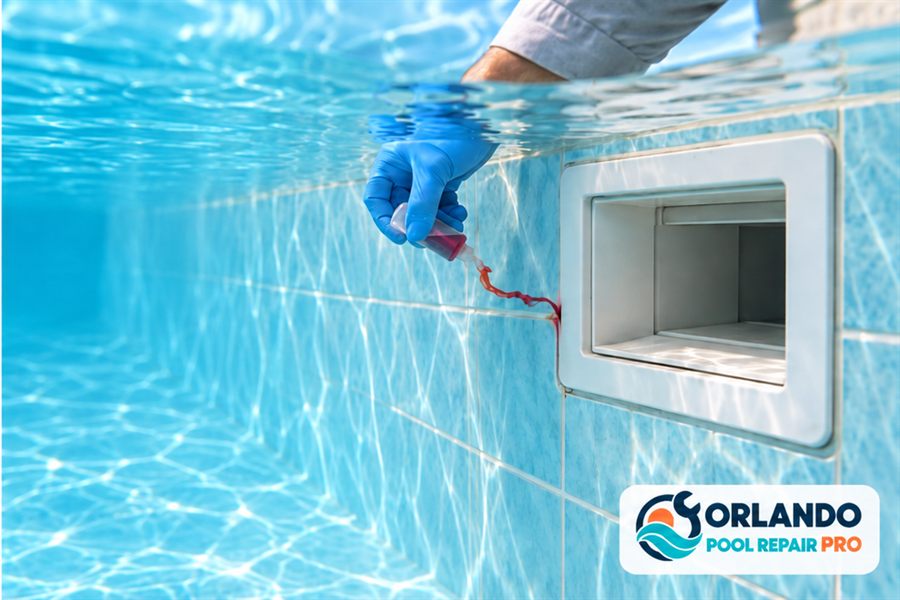
The visit starts with the visible equipment and a clear account of the loss. Appropriate tests may include targeted dye testing, isolated plumbing pressure tests and acoustic locating. The test sequence follows the pool layout and findings, rather than opening the deck at random.
Common places a pool can lose water
Skimmers, return fittings, light niches, valves and buried lines are possible sources. Surface defects can also need investigation. We explain which areas were tested and what remains uncertain, so a repair proposal is tied to evidence rather than a guessed location.
Commercial pool leak detection
A shared-pool operator can provide top-up records, system drawings and equipment schedules. Those records help distinguish a leak from routine use or operational loss. Testing is planned around access, safe closure and the pool systems that need to remain available.
Detection and repair are separate scopes
The diagnostic scope covers testing and findings. Parts, excavation, pipe repairs and finish restoration can be separate charges. Targeted locating may reduce unnecessary opening, but no inspection can promise that every concealed repair will be simple or excavation-free.
Leak-detection price factors
Attached spas, water features, in-floor systems and difficult access can increase testing time. The residential planning range on this site covers a diagnostic visit, not every resulting repair. Commercial and unusually complex systems need their own estimate.